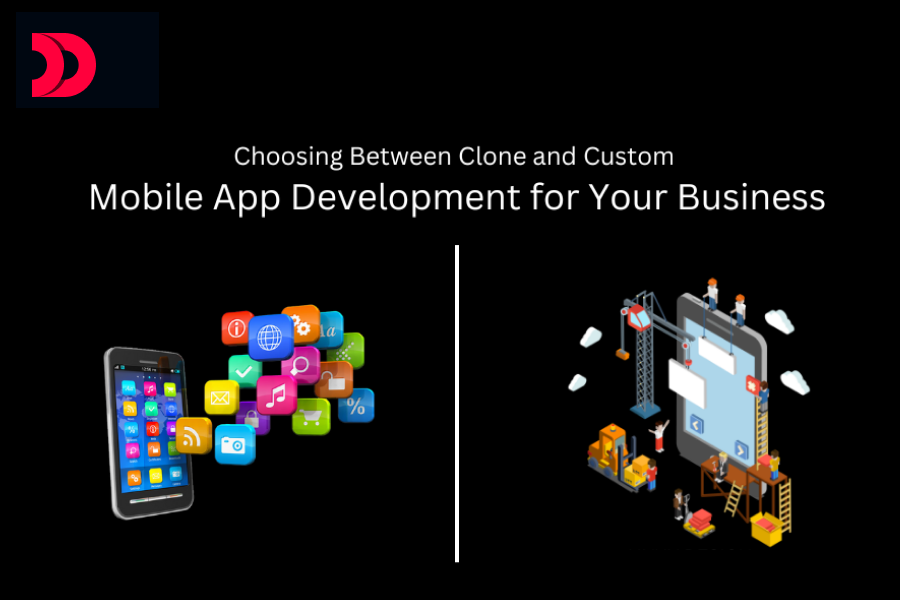
In the dynamic landscape of digital technology, mobile applications have become indispensable tools for companies seeking growth and enhanced client engagement. When contemplating app development, businesses often confront the pivotal decision of whether to pursue custom mobile app development or leverage clone apps. Each approach addresses distinct business needs and objectives, presenting a unique array of advantages and drawbacks.
Clone app development entails creating an application with features and functionalities akin to those found in an already established and successful app. While it may be termed as “clone app development,” the variation is typically tailored to cater specifically to its niche or target audience. This approach offers expedited entry into proven markets by emulating successful concepts.
Cost and Time Efficiency: Leveraging existing code and features streamlines the development process, resulting in significant cost and time savings compared to building an app from scratch.
Proven Success: Clone apps capitalize on market acceptance and user preferences demonstrated by successful predecessors, thereby reducing the inherent risks associated with untested ideas.
Accelerated Time-to-Market: With much of the groundwork already laid, clone apps can be swiftly launched, enabling businesses to capitalize on emerging market trends and opportunities.
Lack of Uniqueness: Clone apps may struggle to differentiate themselves in a saturated market, potentially being perceived as imitations rather than innovative solutions.
Limited Customization: The predefined structure of clone apps can pose challenges in accommodating specific business requirements, restricting flexibility and adaptability.
Unparalleled Flexibility: Custom apps offer businesses unparalleled freedom to incorporate features and functionalities tailored to their unique audience and industry demands.
Brand Identity Reinforcement: Custom mobile app development enables businesses to align their apps closely with their brand identity, fostering consistency and delivering a seamless user experience.
Scalability: Custom apps can be easily scaled and adapted to accommodate evolving business needs or increasing user volumes, ensuring long-term viability and growth.
Higher Initial Investment: Building a custom app from scratch typically involves higher upfront costs compared to cloning an existing app. However, the long-term benefits often outweigh the initial expenses.
Extended Development Timeline: Developing a custom mobile app necessitates creating a bespoke solution tailored to specific requirements, resulting in a longer development cycle compared to clone apps.
The complexity of the app, desired features, design intricacies, and the hourly rates of development teams are key factors influencing the cost of mobile app development. While custom app development may require a larger initial investment due to the bespoke nature of the solution, clone apps generally incur lower development costs by repurposing existing code.
The decision between clone and custom mobile app development hinges on business goals, budget constraints, and the desired level of uniqueness. Businesses prioritizing rapid market entry and cost efficiency may opt for clone app development, while those emphasizing brand identity, unique features, and long-term scalability are better suited to custom development. Collaborating with an experienced mobile app development company enables businesses to make informed decisions aligned with their strategic objectives.
When evaluating mobile app development options, businesses must carefully assess their goals, target audience, and budgetary considerations. Clone apps offer a swift and cost-effective route to market entry, while custom development affords greater flexibility and individuality essential for sustained success. By partnering with a reputable mobile app development company, businesses can navigate this critical decision-making process with confidence, ensuring alignment with their overarching strategies and objectives.