
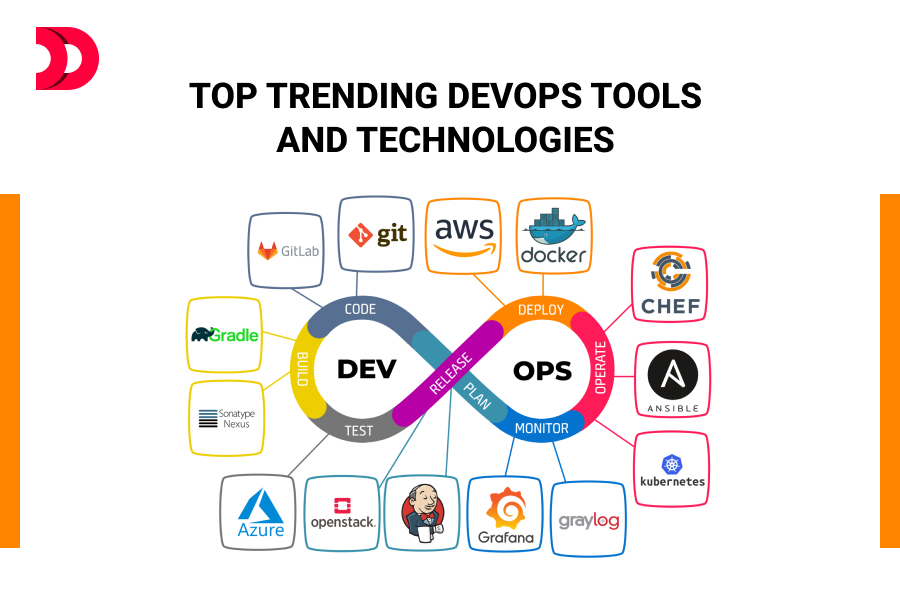
DevOps, a fusion of “Development” and “Operations,” is a set of practices and principles that aim to streamline and automate the collaboration between software development and IT operations teams. The ultimate goal of DevOps is to accelerate software delivery, increase efficiency, and enhance the overall quality of applications.
Importance of DevOps
DevOps has gained immense importance in the tech industry due to its ability to bridge the gap between development and operations, resulting in faster development cycles and reduced errors. In 2023, DevOps continues to be a critical aspect of software development, with organizations of all sizes striving to implement DevOps practices for a competitive edge.
Top DevOps Trends in 2023
DevOps is an ever-evolving field, and in 2023, several trends are shaping the industry:
MLOps: With the integration of Machine Learning and AI into applications, MLOps extends DevOps principles to handle machine learning workflows efficiently.
AIOps: Artificial Intelligence for IT Operations (AIOps) uses AI and machine learning to automate and enhance IT operations and monitoring, thereby improving system efficiency.
GitOps: A methodology that leverages Git for managing and automating infrastructure and application delivery, enhancing version control and collaboration.
Cloud-Native Computing: With the widespread adoption of cloud technologies, DevOps practices are adapting to cloud-native architectures for scalability and flexibility.
Security and Compliance: As cybersecurity threats continue to evolve, integrating security and compliance into DevOps processes has become crucial.
Scalability and Performance: DevOps practices focus on enhancing the scalability and performance of applications to meet the demands of modern users.
Top 10 Trending DevOps Tools and Technologies in 2023:
Splunk:
What is it?
Splunk is a powerful data analytics and monitoring platform.
What does it do?
It collects and analyzes machine data, providing insights and alerts for improved decision-making.
Why is it important for DevOps?
Splunk offers real-time monitoring, troubleshooting, and analytics, essential for maintaining system reliability.
How is it used?
Splunk is used for log analysis, monitoring, and troubleshooting.
Popular companies that use it: Amazon, Adobe, and many more.
Jenkins:
What is it?
Jenkins is an open-source automation server.
What does it do?
It enables continuous integration and continuous delivery (CI/CD) pipelines, automating the software development process.
Why is it important for DevOps?
Jenkins automates the build, test, and deployment process, reducing manual work and errors.
How is it used?
Jenkins is used to create and manage CI/CD pipelines.
Popular companies that use it: Google, Netflix, and others.
Selenium:
What is it?
An open-source programme called Selenium is used to automate web browsers.
What does it do?
It helps automate browser actions and testing, ensuring application functionality.
Why is it important for DevOps?
Selenium aids in automating testing, reducing human effort and ensuring code quality.
How is it used?
Selenium is used for web application testing.
Popular companies that use it: Microsoft, IBM, and more.
Puppet:
What is it?
Puppet is a configuration management tool.
What does it do?
Puppet automates the management of infrastructure and software.
Why is it important for DevOps?
It ensures consistent configuration and scaling.
How is it used?
Puppet is used for infrastructure automation.
Popular companies that use it: Red Hat, Cisco, and others.
Chef:
What is it?
Chef is another configuration management tool.
What does it do?
It automates infrastructure configuration and application deployment.
Why is it important for DevOps?
Chef ensures the desired state of infrastructure, enhancing reliability.
How is it used?
Chef is used for infrastructure automation.
Popular companies that use it: Facebook, Airbnb, and more.
Git:
What is it?
Git is a distributed version control system.
What does it do?
Git manages source code versions, facilitating collaboration and tracking changes.
Why is it important for DevOps?
Git enables version control and collaborative software development.
How is it used?
Git is used for code versioning and collaboration.
Popular companies that use it: GitHub, GitLab, and many others.
Ansible:
What is it?
Ansible is an open-source automation tool.
What does it do?
It automates software provisioning, configuration management, and application deployment.
Why is it important for DevOps?
Ansible simplifies complex tasks and improves infrastructure management.
How is it used?
Ansible is used for configuration management and automation.
Popular companies that use it: NASA, Atlassian, and more.
Docker:
What is it?
Docker is a containerization platform.
What does it do?
Docker enables the creation and deployment of lightweight, portable containers.
Why is it important for DevOps?
Containers improve application portability and scalability.
How is it used?
Docker is used for containerization of applications.
Popular companies that use it: Spotify, PayPal, and others.
Nagios:
What is it?
Nagios is an open-source monitoring system.
What does it do?
Nagios monitors hosts, services, and network devices, providing real-time alerts.
Why is it important for DevOps?
Nagios helps maintain system reliability by identifying and addressing issues.
How is it used?
Nagios is used for network and infrastructure monitoring.
Popular companies that use it: IBM, Cisco, and more.
Kubernetes:
What is it?
Kubernetes is an open-source container orchestration platform.
What does it do?
Applications that are containerized may have their deployment, scaling, and administration automated with Kubernetes.
Why is it important for DevOps?
Kubernetes simplifies container management, making applications more reliable.
How is it used?
Kubernetes is used for container orchestration.
Popular companies that use it: Google, Spotify, and many others.
Benefits of Using These Tools and Technologies:
Using these DevOps tools and technologies in 2023 offers several benefits:
Increased efficiency: Automation reduces manual work, increasing the efficiency of development and operations teams.
Improved collaboration: Tools like Git promote collaborative development and streamlined workflows.
Reduced errors: Automation and continuous testing minimize human errors and ensure consistent deployments.
Faster time to market: CI/CD tools like Jenkins speed up development, allowing quicker releases.
Increased reliability: Configuration management and containerization enhance application and infrastructure reliability.
Conclusion:
In 2023, the DevOps landscape is evolving rapidly, with a focus on enhancing efficiency, security, and scalability. By embracing the latest trends and leveraging the top DevOps tools and technologies, organizations can stay competitive and deliver high-quality applications. DevOps appears to have a bright future as technology advances.
I hope this blog post has been informative and helpful. Please let me know if you have any questions.