
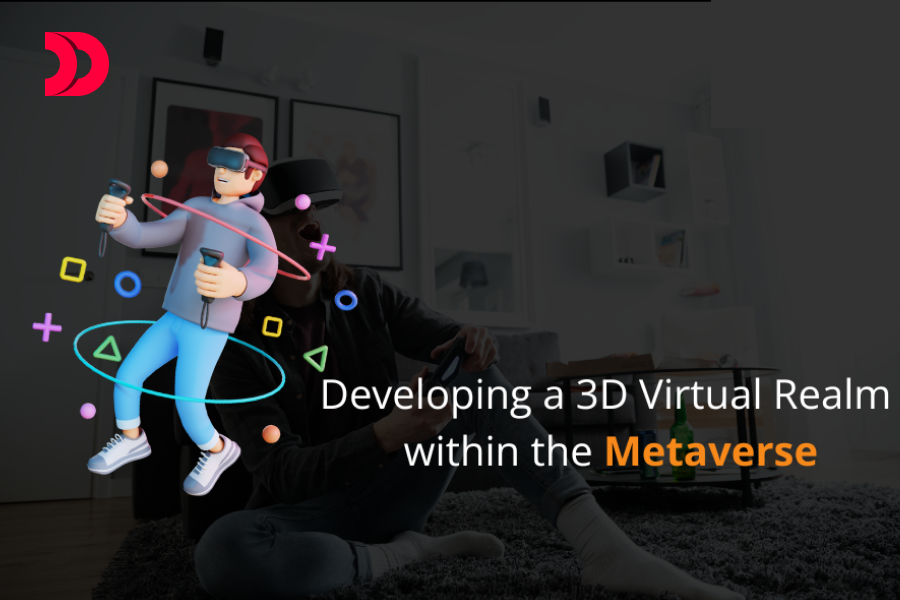
The Metaverse, a concept long cherished by tech enthusiasts, is now gaining significant traction owing to advancements in virtual reality technology. As a leading Metaverse design company, our commitment lies in pushing the boundaries of virtual reality possibilities. This article delves into the intricacies of the Metaverse, with a specific emphasis on the development and creation of Metaverse 3D environments.
The Metaverse is envisaged as an immersive digital realm accessible through various devices such as smartphones, computers, and virtual reality headsets. Within this shared space, users can engage with one another and interact with virtual objects in real-time, simulating physical presence. Major tech players like Facebook and Google are heavily investing in Metaverse development, recognizing its potential across gaming, social interactions, entertainment, commerce, and beyond.
Our team of dedicated Metaverse developers endeavors to construct immersive and captivating digital worlds. Below are compelling reasons for delving deep into Metaverse three-dimensional space creation:
Facilitating Intense Virtual Experiences:
In times when physical interaction is limited, Metaverse development offers an alternative avenue for connection, fostering community amidst geographical or physical constraints.
Unleashing Creative Potential:
The Metaverse unleashes boundless opportunities for creative expression, empowering users to design and experience music, digital art, and games within an immersive environment. It serves as a fertile ground for innovation, nurturing novel forms of digital expression.
Central to the Metaverse’s allure is its creation of immersive 3D environments. These spaces must not only be visually appealing but also imbue users with a sense of presence and belonging. Key considerations include:
Avatar Customization:
Avatars, virtual representations of users within the Metaverse, must offer extensive customization options, enabling individuals to express their unique style while seamlessly interacting with others.
Persistent Environments:
Metaverse 3D Space Development facilitates the creation of dynamic, ever-evolving virtual realms that persist regardless of user presence, fostering a sense of continuity and growth.
Seamless Integrations:
Integration of diverse technologies and platforms is paramount, extending to social media, e-commerce, gaming, and more, to provide users with a comprehensive and enriched experience.
Advanced Security Measures:
Ensuring data protection and safeguarding user transactions are paramount in Metaverse 3D Space Development. Innovative security protocols such as encryption and multi-factor authentication are imperative to mitigate unauthorized access risks.
Metaverse 3D Space Development yields numerous benefits that revolutionize user experiences and interactions:
Enhanced Immersion:
Users are transported into lifelike virtual environments, fostering deeper connections and engagement impossible through traditional 2D interfaces.
Increased Collaboration:
Geographical barriers are dismantled, facilitating seamless collaboration and real-time interaction, thereby enhancing productivity and efficiency across various domains.
Improved Accessibility:
Metaverse 3D Space Development promotes inclusivity by eliminating physical barriers, enabling individuals with disabilities or limited mobility to actively participate in activities and engage with others.
Cost-Effective Solutions:
By obviating the need for physical infrastructure and reducing travel costs, Metaverse 3D Space Development presents a cost-effective alternative for organizations, facilitating employee training, research endeavors, and event hosting.
The Metaverse represents a dynamic frontier poised to reshape digital interactions across diverse sectors. While its potential is vast, early-stage considerations surrounding user safety, inclusivity, and preservation of physical experiences are paramount. As a pioneering Metaverse development firm, Devstree Canada remains steadfast in crafting immersive virtual experiences that redefine digital interaction paradigms.