
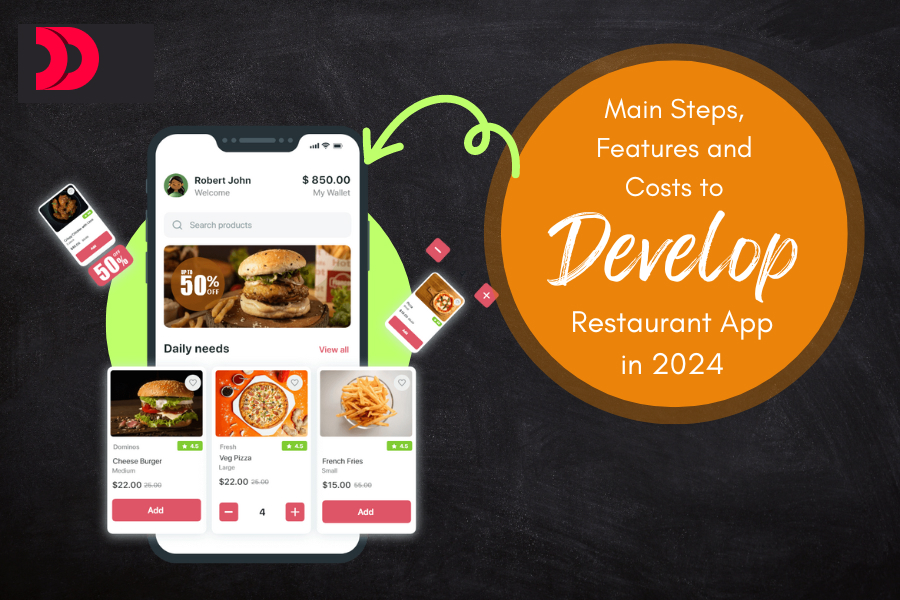
In an era dominated by digital presence and instant convenience, the creation of a mobile application has become a vital necessity for restaurants aiming to stay competitive. As we step into 2024, the field of restaurant app development is teeming with innovations and advancements that empower restaurants to deliver more sophisticated and consumer-centric experiences. These experiences are crucial for building customer loyalty and driving business growth.
This comprehensive guide is designed to be a valuable resource for restaurant app development in 2024. It offers a deep dive into the market landscape, different types of apps, essential features, the developmental process, and associated costs. Whether you’re a restaurant owner contemplating the adoption of mobile technology or a developer seeking specifics on creating restaurant apps, this article is crafted to provide insightful and detailed information. It aims to assist you in navigating the development process with efficiency and effectiveness.
Over the past few years, the restaurant apps market has experienced remarkable growth, fundamentally reshaping restaurant operations and customer interactions. This transformation is driven by the increasing reliance of consumers on mobile devices and a growing preference for services that are quick, convenient, and contactless.
As of 2024, the restaurant apps market is exceptionally dynamic and competitive, boasting a plethora of applications that offer a wide array of services. These services span from food ordering and delivery to table reservations and payment processing. The global online food delivery market, in particular, is anticipated to witness substantial growth, potentially reaching unprecedented market values and expanding its consumer base.
Within this ever-evolving market, various dynamics and trends are shaping the industry. There is a heightened focus on user experience and personalization, driving the development of more intuitive and user-friendly apps. The integration of technologies such as Artificial Intelligence, Machine Learning, and Augmented Reality is becoming commonplace, enabling enhanced customization and interaction.
Sustainability emerges as a significant trend, with many apps incorporating eco-friendly initiatives and providing features like packaging preferences and carbon footprint information. Furthermore, there is a notable surge in health and wellness-oriented apps, offering nutritional information, diet preferences, and healthier food options.
While the market presents abundant opportunities, it is not without its challenges. App developers and restaurant owners face obstacles such as security concerns, data privacy issues, and intense competition. Nonetheless, these challenges also open doors for innovation and improvement. Creating secure, compliant, and distinctive apps can set businesses apart in the competitive landscape and foster trust with users.
Within the vast realm of restaurant apps, a multitude of types cater to diverse needs, preferences, and operational aspects of the restaurant industry. Each type serves a distinct purpose, offering specific features and advantages. Let’s delve into the different categories of restaurant apps, shedding light on some well-known real-world examples.
Food delivery apps empower users to effortlessly order from a plethora of local restaurants and have their meals delivered to their doorstep. These apps typically boast user-friendly interfaces, a diverse array of cuisines, real-time order tracking, and multiple payment options. Examples include UberEats, DoorDash, and Grubhub.
Table reservation apps enable users to book tables at their preferred restaurants. They often provide flexibility in choosing the date, time, and seating preferences, reducing waiting times and enhancing the overall dining experience. OpenTable and Resy are notable examples in this category.
Point of Sale (POS) and payment apps streamline the payment process, allowing customers to settle their bills via smartphones. This reduces reliance on physical menus and bills, promoting contactless payments. Square and Toast are examples of such apps.
Review and recommendation apps curate user-generated reviews and ratings for restaurants, aiding others in making informed dining decisions. These apps typically feature restaurant details, menus, photos, and user comments. Yelp and TripAdvisor are prominent players in this category.
Loyalty program apps are crafted to boost customer retention by rewarding loyalty with discounts, offers, and exclusive rewards. They encourage repeat business and enhance the overall customer experience. Examples include Starbucks Rewards and Dunkin’ DD Perks.
Dietary and nutrition apps focus on providing users with nutritional information, personalized diet plans, and healthy food options. They cater to health-conscious consumers seeking nutritious and balanced meals. MyFitnessPal and Lose It! fall into this category.
Restaurant management apps serve as comprehensive solutions for overseeing various operational aspects, including inventory management, employee scheduling, and sales monitoring. These apps streamline day-to-day tasks for restaurant owners and managers. Noteworthy examples include TouchBistro and Upserve.
Creating a thriving restaurant app requires the incorporation of a range of features that address diverse user needs and expectations. These features must elevate usability, deliver value, and ensure a smooth, enriching user experience. The following essential features are foundational for any restaurant app, each playing a distinct role in enhancing interaction, operational efficiency, and overall user satisfaction.
Creating your restaurant app is a strategic move to enhance customer experience and optimize operational efficiency. Here are the five crucial steps to develop a successful and user-friendly restaurant app:
Before embarking on app development, clearly outline your goals and identify your target audience.
Select the type of restaurant app that aligns with your restaurant’s needs and customer expectations. Options include a food delivery app, a dine-in app, or a comprehensive restaurant management app.
Critical to meeting user expectations, choose the right set of features for a seamless user experience. Refer to the ‘Restaurant App Main Features’ section for a comprehensive list.
Once you’ve clarified your objectives, audience, app type, and features, move on to the development phase. This involves several sub-steps:
After thorough testing, launch your app on relevant platforms and focus on effective marketing strategies to reach your target audience and drive downloads.
The cost of developing a restaurant app can vary significantly based on its complexity, typically classified into three main types: Basic, Medium Complexity, and High-End. Below is an overview of each complexity level along with the estimated costs associated.
Description: Offers fundamental features with a simple user interface, menu display, order placement, and basic user support.
Estimated Cost: $15,000 – $30,000.
Typical Features:
Description: Introduces advanced features and improved design elements, enhancing user interaction. Includes real-time order tracking, payment integration, user reviews, ratings, and loyalty programs for a more enriched user experience.
Estimated Cost: $30,000 – $60,000.
Typical Features:
Description: Top-tier applications with cutting-edge technology integrations such as AI, AR, and ML. Provides a premium user experience with personalized engagement and sophisticated features like table reservations, advanced analytics, premium support, and maintenance.
Estimated Cost: $60,000 – $100,000 or more.
Typical Features:
In conclusion, venturing into the development of a restaurant app involves careful consideration of factors such as objectives, target audience, app type, and features. The cost of building such an app can vary based on complexity, with Basic apps ranging from $15,000 to $30,000, Medium Complexity apps from $30,000 to $60,000, and High-End apps at $60,000 to $100,000 or more. Each complexity level offers distinct features catering to different user needs and expectations.
For a successful restaurant app, it is imperative to align the app’s functionality with user preferences, competitor analysis, and market trends. Features like user-friendly interfaces, real-time tracking, payment integrations, and loyalty programs contribute significantly to a seamless and enriching user experience.
When considering the development of a restaurant app, engaging with experienced developers is crucial. Devstree Canada, with its expertise and innovative solutions, can play a vital role in bringing your restaurant app vision to life. With a focus on user-centric design and cutting-edge technology, Devstree Canada can help you create a standout restaurant app that meets the demands of the dynamic market landscape.